

Food Robot Conveyor Records: Linear and Circular Tracking
2026-11-05
Food Robot Conveyor Records: Linear and Circular Tracking
Food Robot Conveyor Records need to distinguish conveyor geometry from the generic statement that a robot follows a conveyor. Universal Robots documents separate linear and circular tracking descriptions. The reference objects differ, and a circular path description has a separate tool-orientation question. This article reads a hypothetical food-equipment appendix. It handles no food, changes no installation, connects to no encoder, and performs no tracking or robot motion.
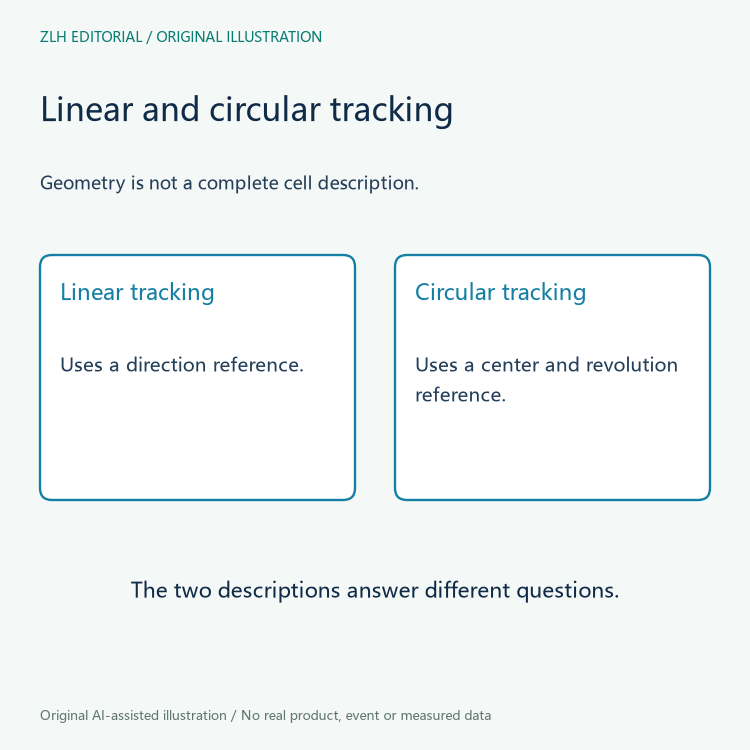
Linear tracking identifies a direction reference
The official linear conveyor tracking reference describes a direction in the robot base coordinate system. Its encoder relationship is expressed in ticks per meter of conveyor movement. Those items belong to the documented linear relationship. A feature list that merely says “conveyor support” does not identify them.
Suppose a fictional food-robot procurement pack contains a belt illustration and a generic tracking note. Ask the contributor which manufacturer function description the note refers to and what geometry it intends. A straight-looking belt picture is not an actual configuration record. This article does not derive direction vectors, select encoder values, or assess whether the offered equipment matches the drawing.
Circular tracking uses a center and revolution relationship
The official circular conveyor tracking reference instead identifies a center in the robot base coordinate system and an encoder relationship per revolution. These are not interchangeable labels for the linear reference. Keep the center and direction roles separate in a handover table rather than shortening both to “conveyor position.”
A fictional appendix might describe a rotating presentation surface without providing its actual settings. The reviewer can retain that as a stated geometry and request the corresponding source material. A circular illustration does not establish that tracking was configured or executed. Nor does a documented encoder relationship demonstrate that the encoder supplied any actual observations during a particular task.
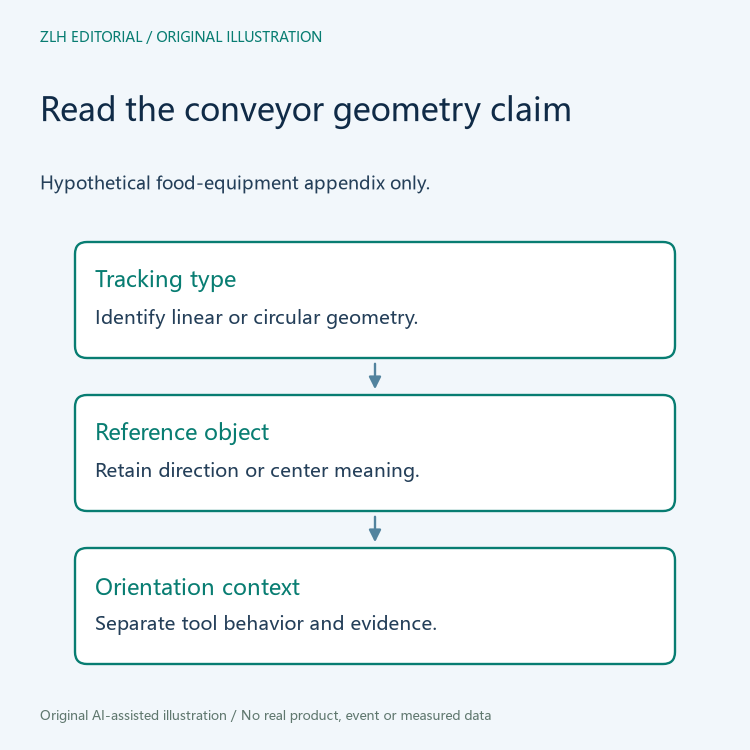
Tool orientation is a separate circular-tracking question
The circular reference includes rotate_tool, which distinguishes rotating the tool with the conveyor from retaining the orientation specified by the trajectory. A circular tracking label alone therefore does not settle the orientation behavior being described. A procurement explanation should name that relationship if it makes an orientation claim.
This is a distinction between documented roles, not a recommendation about how a food robot should be arranged. The article does not choose an orientation, calculate a trajectory, or state that any end effector can handle a food item. Any claims about the actual accessory and its use need evidence that addresses those objects directly.
Retain encoder association without inferring a complete cell
Both cited SW5.19 entries describe an encoder-index argument. A handover should keep the association explanation attached to its actual source. The presence of an index in an example does not establish how many conveyors or encoders an offered installation actually contains. Do not turn manufacturer example arguments into an equipment inventory.
The geometric distinction also does not answer how a conveyor communicates task completion or readiness to another system. That interaction needs its own description. A direction or center identifies a tracking relationship; it is not a completion-handshake record. Keeping those questions separate prevents a geometric capability statement from being promoted into a claim about the entire food-production workflow.
A useful hypothetical table can identify the manufacturer version, stated conveyor geometry, the reference object, the kind of encoder relationship, tool-orientation explanation where relevant, and actual supplied observations. If only a manual excerpt is attached, call it a definition reference. Leave unavailable configuration or execution evidence as unavailable rather than filling the gap with a plausible example.
Later revisions should also retain their subject. Correcting a caption about linear versus circular geometry may only change the documentation. A new configuration record, if supplied, is a different object with its own identity. A claimed physical installation change needs separate evidence. Do not let one revised illustration imply that all three changes occurred together.
One answerable question for the contributor is “which reference relationship does this tracking claim describe?” The response should point to the applicable object rather than a general claim that the system handles moving food. No production trial, portion result, conveyor speed, or task success is reported here. The article stays with the meaning of the cited function descriptions.
Photographs cannot fill every reference gap either. A picture of a round presentation surface might help explain the claimed geometry, but it does not reveal an encoder relationship or tool-orientation argument. Label what the photograph actually supplies and keep the missing technical explanation visible. The same applies to a straight conveyor photograph: a visible belt direction is not a documented robot-base reference. This article examines neither kind of photograph and makes no geometric finding about an actual installation.
The original illustrations compare geometry roles without showing a real cell, numeric encoder setting, or operating sequence. Continue through the food robot documentation section and related resources section. Separating linear direction, circular center, and tool orientation makes a procurement appendix clearer while leaving actual food-handling and system-integration findings to their own evidence.


