

Cooking Robot Hygiene FAQ: Arm Design and Food Oil
2026-11-05
Cooking Robot Hygiene FAQ: Arm Design and Food Oil
A cooking robot proposal may place food oil, hygienic design and cleanability in the same feature list. These terms are useful starting points, but a buyer needs to know what each statement actually concerns. A lubricant statement does not describe every exposed surface, and an arm design statement does not describe the entire cooking cell. This FAQ uses two Stäubli manufacturer brochures to frame separate procurement questions. It does not certify a machine, evaluate a restaurant's cleaning process or recommend a lubricant or chemical.
Does a food-oil statement describe the whole cell?
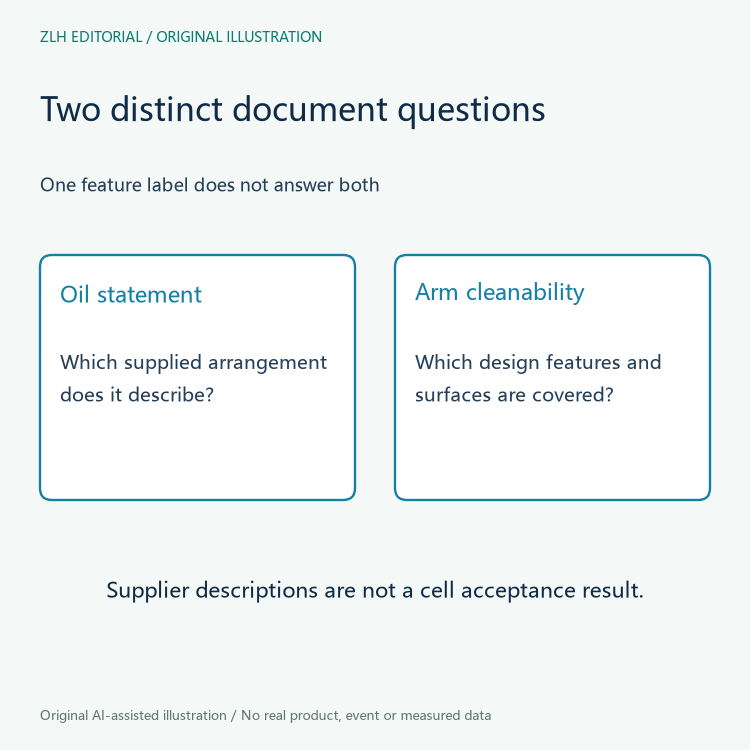
No. Stäubli's Automation Solutions in the food industry brochure lists food-oil information alongside accessibility, cleanability and other design features. Keeping those statements separate is useful when reading a quotation. One concerns the lubricant described by the supplier; others concern the construction and treatment of the arm. A quotation should make clear which actual product and supplied configuration the statements cover.
The procurement question is therefore specific: which lubricant-related statement applies to the offered arm, and what documentation identifies the delivered arrangement? The answer should not be inferred from an unrelated brochure image. Nor should a buyer interpret the presence of a familiar food-related term as permission for every kind of contact with ingredients. This article makes no contact approval or classification decision.
Consider a hypothetical restaurant proposal containing a robot arm, a cooking attachment and a conveyor. The arm supplier's brochure may help identify questions about that arm. It does not automatically describe the attachment's materials, the conveyor or the completed cell. The example is invented and reports no installation. It illustrates why a feature list should retain a clear equipment boundary.
What does the design description help a buyer ask?
The food-industry brochure describes encapsulation, smooth surfaces, internal connections and access to important components, among other features. Those manufacturer statements can guide a request for the proposed equipment's design information. Ask which surfaces and connections are included, which parts are supplied by the integrator and which documents describe the completed arrangement. Keep the reply linked to the actual offer rather than a whole product family.
This is a review of evidence scope. It does not prescribe how to wash equipment or verify removal of contamination. A supplier's design description can be relevant while a project still needs its own cleaning documentation and acceptance arrangements. The person writing the procurement summary should record those open questions instead of turning design language into an observed sanitation result.
Why keep the model and environmental version visible?
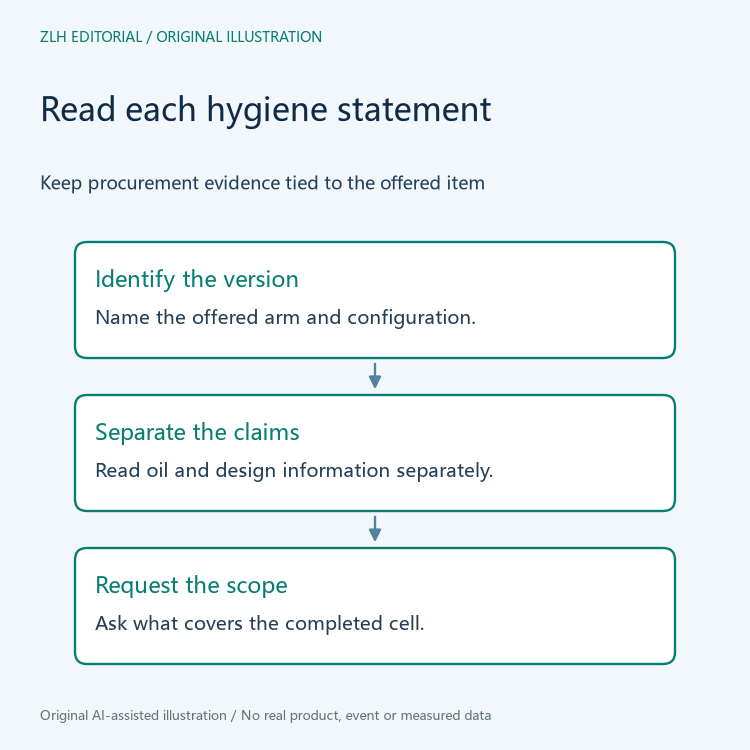
The separate TX2 robot range brochure separates robot models and environmental offerings in its table, including hygienic and humid categories. It also lists compatibility with food oil among its arm features. A buyer should preserve the difference between a general model description and the environmental version actually included in the quotation. A family name alone may leave that detail unresolved.
Request a clear identification of the offered model and version, with supporting documents from the responsible supplier. If an accessory is optional, the quotation should make its inclusion clear. Do not populate missing details by copying the most favorable statement from a related page. A well-written procurement note distinguishes a documented inclusion from a question still awaiting a response.
Can a brochure close the hygiene acceptance question?
A brochure can support a bounded statement about what its manufacturer describes. It does not, by itself, close the acceptance question for an unknown cooking application. The completed system may include many components and a particular food workflow. The buyer and responsible project team need to define what evidence is required for that specific scope. This article does not offer a regulatory interpretation or a general assurance of hygienic performance.
For example, a hypothetical handover might document the arm version correctly while leaving the cooking attachment's documentation incomplete. The accurate conclusion is that one identified portion of the information has been provided. Calling the entire cell approved would hide the missing portion. Keep the acceptance decision attached to its agreed subject and actual evidence rather than the visual completeness of a presentation.
How can a short supplier question stay reviewable?
Name the item in the offer, identify the exact feature statement and ask what delivered configuration it covers. Then request the corresponding information for the other cell components where relevant. Separate the answer about oil from the answer about design access and from any project-specific evaluation. This gives the supplier a concrete question and gives the buyer a clear place to record what remains unresolved.
The linked food brochure is marked June 2024, V2; the TX2 brochure is marked April 2026, V14. Both were read on November 4, 2026. They remain manufacturer descriptions, and their dates should stay with any quoted feature. Preserve the relevant version or access record for an actual procurement file. The illustrations are original conceptual aids, with no product likeness or cleaning result. The cooking robot procurement collection and article directory offer related reading. A useful food oil note explains its own scope while leaving arm design and completed-cell evidence visible.


