

Cooking Robot Downtime Notes: Separate Refill Events
2026-11-04
Cooking Robot Downtime Notes: Separate Refill Events
Cooking robot downtime can become an ambiguous heading in a service record. Replenishing ingredients, pausing a particular assembly task and experiencing an unplanned interruption describe different events. A supplier's statement about one of them should not silently become a statement about all of them. This article reads Chef Robotics' official meal-assembly material to clarify the documentation questions. It does not operate food equipment, observe a production line or assess food-safety performance.
Name the event before assigning a downtime label
A useful record begins with what the contributor says occurred. Was an ingredient container replenished, did assembly pause, or was another task unavailable? The event description should identify the system and relevant period without turning every planned replenishment into a fault. Equally, the word refill should not conceal an interruption that the record actually needs to explain.
Imagine a hypothetical service summary saying that a robot needed several refills during a shift and therefore had several breakdowns. The recipient should ask whether the original observations support that classification. This fictional example supplies no refill count and reports no actual failure. It illustrates why event type and the effect on the agreed task need separate fields.
Read the supplier's refill statement in its task context
The official Chef AI-enabled system page describes a meal-assembly system and a two-pan arrangement in which the robot can draw from one pan while a refiller handles the other. The description retains a human replenishment role. It should not be summarized as a claim that all ingredient handling is performed without people.
The page presents a refill-related continuity claim within that system description. A service note should keep the event and scope attached to the claim. It does not follow that every activity across a kitchen or factory continues without interruption, or that the supplier has eliminated every reason for downtime. Neither conclusion is established by the inspected refill paragraph.
This article uses that description to ask better record questions. It does not provide a sequence for moving containers around operating equipment. The actual activity requires its applicable instructions, training and responsible site process. An editorial explanation of a supplier claim cannot authorize a food-production operation.
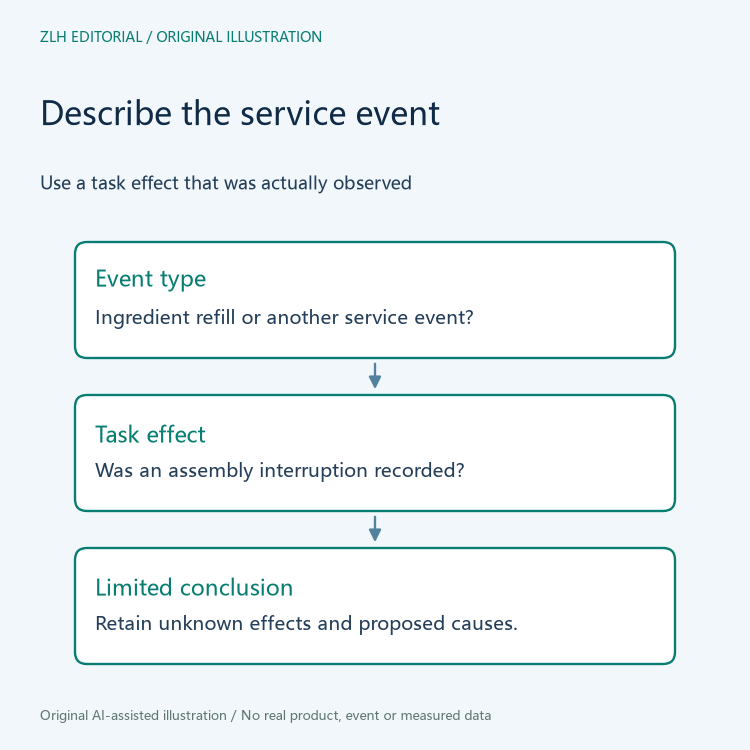
Capacity changes do not supply an observed interruption count
Chef Robotics' official Chef+ announcement dated December 18, 2025 discusses ingredient capacity and the work of a refill runner. It describes larger ingredient containers as a way to extend the interval between refills. That is a manufacturer explanation of a product change, with its own model and publication context.
A maintenance editor should not copy that explanation into a local service report as a measured reduction in interruptions. The report would need an identified system, observation period, ingredient context and event definition to support its own comparison. This article does not calculate a percentage improvement or infer staffing requirements from the announcement.
The announcement and the general system page also should not be combined into an unlabelled equipment configuration. Identify the product context relevant to the record being reviewed. If the provider says a specific unit has a particular arrangement, obtain supporting material for that unit rather than assuming that every detail on both pages applies together.
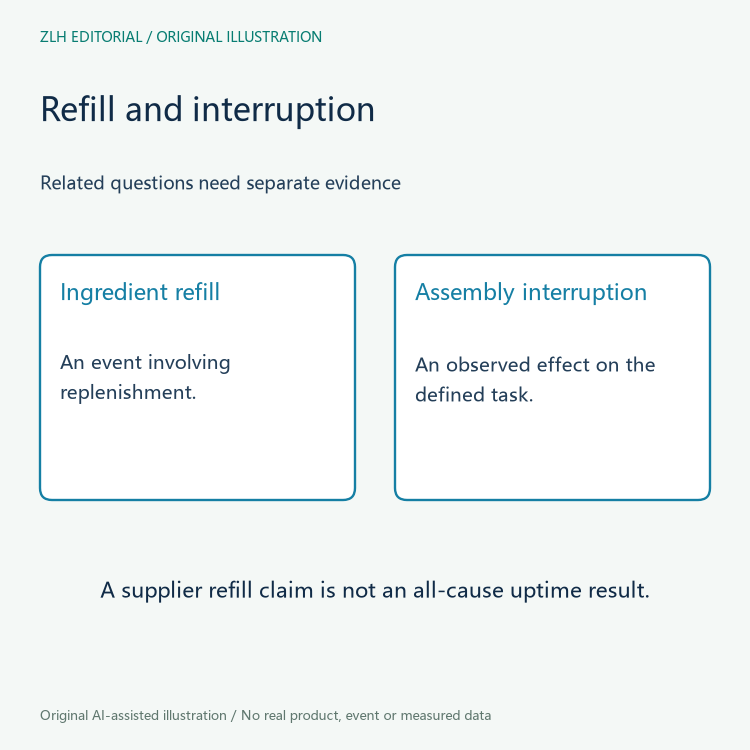
Keep the event time and its task effect together
For an actual retained observation, the contributor should explain how the event period was identified and which task effect was recorded. A refill event may be documented without a corresponding statement about assembly availability. If that effect was not observed, keep it unknown instead of adding a zero-duration interruption or a breakdown classification.
Similarly, a reported pause needs its own description before anyone assigns a cause. The presence of a refill entry nearby in time does not by itself explain every service issue. Ask the contributor which relationship was actually observed and which explanation remains a hypothesis. Preserve the original event record so a later review can return to the same question.
Write a maintenance conclusion that retains the distinctions
A clear revision can separate ingredient replenishment events, observed assembly interruptions and other unresolved service concerns. It can also identify which manufacturer description was consulted. A statement that the categories are now clear is different from a finding that the robot met a particular availability target. The latter needs its own defined period, measure and evidence.
The original illustrations contain no refill measurements, real container design or invented reliability chart. Related reading appears in the cooking robot procurement collection and the article directory. Keeping refill events separate from the effect they may or may not have had helps a cooking robot downtime account remain useful to the next reviewer without turning a product description into a local operating result.


