

Cooking Robot Portal Acceptance: Offer a Drag Alternative
2026-11-02
Cooking Robot Portal Acceptance: Offer a Drag Alternative
A drag alternative can make a cooking-robot web portal easier to operate when an interface asks users to move an item on screen. The receiving buyer should ask whether the same interface task can be completed without holding and dragging a pointer. This article proposes an acceptance review for a fictional portal. It changes no recipe, starts no equipment, and gives no food-processing instructions.
Describe the interface task rather than the gesture alone
Ask the supplier what the user is trying to accomplish. Moving an item in a displayed list, choosing a position, and navigating a view are different tasks. The acceptance checklist should identify the intended result so a proposed alternative can be evaluated against the same purpose.
The receiving team should also identify the actual portal revision and control under review. A demonstration mockup may illustrate an intended interaction without establishing the behavior of the delivered application. Keep that distinction visible when asking the supplier for evidence. The alternative’s explanation should remain available to the receiving reviewer after the demonstration ends, so its intended relationship to the task can be checked again.
For the fictional review, no operational sequence or ingredient arrangement is supplied. The discussion concerns interface access only. It should not imply that rearranging a web display is authorized to alter a physical process or that a convenient interface establishes safe equipment operation.
Prepare a question about how the user recognizes completion. An alternative is difficult to assess if the intended on-screen outcome is unclear. The supplier should explain the result in the agreed interface context rather than rely on a reviewer’s memory of a drag demonstration.
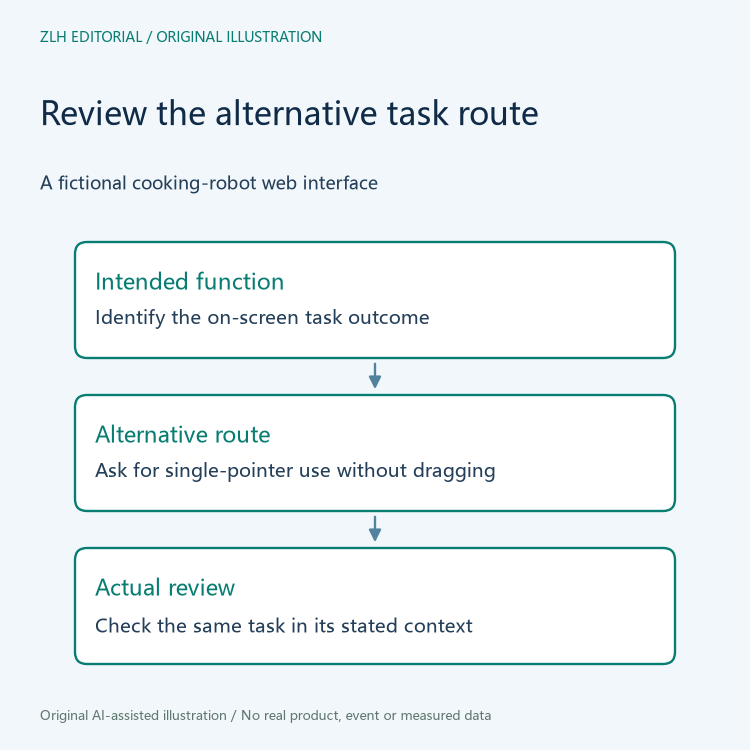
Ask for the single-pointer route without dragging
The WCAG explanation of Dragging Movements describes achieving dragging functionality with a single pointer without dragging, subject to its essential-functionality and user-agent exceptions. This gives the buyer a specific question about the delivered interaction.
A supplier might propose another control arrangement for the same task. The acceptance discussion should ask how that arrangement completes the intended function, rather than count the presence of an extra button as sufficient evidence. The relationship to the task matters.
Do not assume that a keyboard route alone answers the single-pointer question. Different interaction requirements have different scopes. The receiving note should identify what was reviewed and which questions remain for the responsible accessibility or interface team.
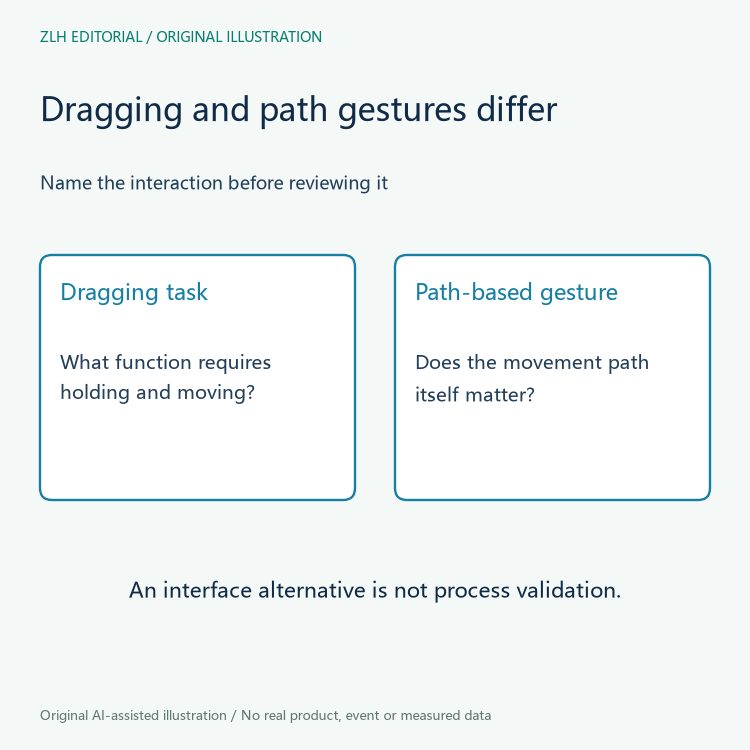
Keep dragging distinct from a path-based gesture
The WCAG explanation of Pointer Gestures addresses multipoint or path-based gestures and their alternatives within its stated scope. It helps distinguish a task requiring a particular path from one involving a dragging movement. These should not be merged under a vague gesture label.
Ask the supplier which interaction the actual control requires. The reviewer needs that description before deciding what kind of alternative is relevant. A moving pointer on a video is not a complete account of the interaction semantics implemented by the portal.
This article performs no gesture or alternative interaction. The official explanations supply the conceptual scope, not a result about a specific cooking-robot product. A later authorized review would need the real control, environment, attempted task, and observed outcome.
Review equivalent task completion in the delivered interface
A proposed acceptance exercise should compare the intended task result, not merely the appearance of two controls. Ask whether the alternative lets the user identify the relevant item and reach the same agreed interface outcome. Keep unexplained differences as open questions.
If the alternative changes other state, request an explanation rather than treating the new behavior as automatically acceptable. The portal owner should identify what the control actually does. An interface review should not silently expand into an operational trial on physical equipment.
Record only observations actually made. A successful supplier demonstration in a different environment may be useful context, but it is not a receiving test that never occurred. Preserve the boundaries of each piece of evidence and avoid a broad passed label.
Accept the interaction with its limits clear
The handover should connect the intended function, required interaction, proposed alternative, and actual review. It should distinguish this task from complete accessibility, equipment safety, food hygiene, or process validation. Those topics need their own responsible assessment.
When the portal changes, ask which alternatives and earlier observations need renewal. Keep the prior control description with its original evidence. A familiar icon should not imply that the task behavior remained unchanged after a revision.
More interface notes appear in our cooking robot portal section and the reading directory. Both original illustrations contain no real recipes, ingredients, user test results, physical robot actions, or completed portal acceptance.


