

Induction Cap Sealing: The Foil and the Backing Separate
2026-11-10
Induction Cap Sealing: The Foil and the Backing Separate
Induction Cap Sealing uses an electrically conductive foil inside a closure to supply heat to a separate bonding layer. In a common two-piece liner, the same heating event also releases a temporary bond between the foil section and a backing inside the cap. Selig’s liner description and an original induction innerseal patent explain the two interfaces. One stays at the container mouth after the cap comes off, while the other remains inside the cap.
Several layers start together inside the cap
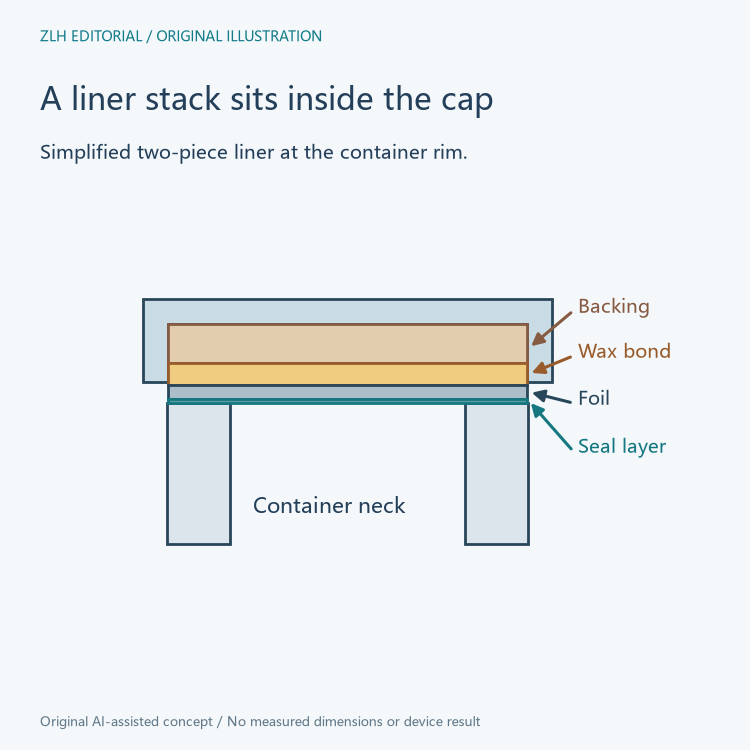
Read the liner from the cap side toward the container opening. In the simple two-piece example, a backing sits next to the cap. A wax bond holds that backing to the foil portion during handling. Aluminum foil supplies the conductive layer. A heat-seal material on the lower face meets the rim of the container. Commercial liners can add other layers for protection, pressure distribution or easy opening.
The cap and container neck position the stack so the lower sealing surface contacts the rim. The rim is the annular surface around the opening. The foil spans the opening, but the sealing bond forms where the heat-seal layer meets the rim. A section through the cap therefore shows both a film bridging a space and contact around its perimeter.
The foil receives energy and passes heat to adjacent layers
When the capped container passes the induction head, the electromagnetic field induces current in the metal foil. The foil heats and transfers energy into nearby layers. Selig describes a heat-seal material selected to suit the container. As that material softens under the conditions of the process, it can form a bond with the rim as the assembly cools. The heat-generating layer and the layer that adheres to the rim have different jobs.
For this reason a photograph of the metal surface gives only part of the information about the seal. Two liners can both contain aluminum while using different sealing polymers and backing structures. The rim material and the surfaces touching it explain why a particular liner is used. The cap profile and contact around the rim also affect the way those materials meet during heating and cooling.
The wax bond releases the backing in a two-piece construction
The original innerseal patent describes a layer of wax between the pulpboard backing and foil. Heat melts that temporary layer. In its pulpboard example, the backing absorbs the molten wax and the bond between backing and foil weakens. At the same time, a separate heat-seal layer on the other side of the foil bonds at the rim. Both changes occur in the same stack, but their effects are opposite. The upper interface releases while the lower one bonds.
When the cap is first removed, the backing stays in the cap and the foil portion stays over the opening. The foil can then be removed to access the contents. In the two-piece arrangement described by Selig, the backing provides a secondary liner for closing the container again. A one-piece construction may omit that separate cap-side backing. Its layers can still form a foil seal at the rim without splitting into the same two destinations.

Read the seal and the closure as two related parts
The closure supplies positioning and pressure while the liner is in contact with the rim. The foil supplies heat and forms part of the spanning barrier. The sealing material at its underside supplies the rim bond. If the package has a secondary backing, that backing has a later role after the foil has been taken away. Each function belongs to a specific interface in the section.
Even when two closures use the same foil and backing, their rim contact can differ. Selig points to the fit of the closure and the shape of the rim surface because contact has to extend around the opening. A liner can separate from its backing while still having uneven contact at the rim. Observing one interface therefore supplies little information about the condition of the other.
Selig discusses pressure, exposure to the field and cooling as separate influences on the result. They belong to the exact container, cap and liner combination. A line drawing can show where the liner touches the rim and where the backing separates. Its strongest contribution is explaining the destinations of the layers before and after first opening. That account also distinguishes the original foil seal from the later contact made by the cap liner.
Primary references are Selig’s induction cap sealing technical paper and the published induction innerseal patent. See food packaging equipment references and related technical articles.


