

Combi Oven Heat Transfer: Steam and Surface Condensation
2026-11-09
Combi Oven Heat Transfer: Steam and Surface Condensation
Combi Oven Heat Transfer can involve both hot circulating air and water vapor that condenses at a cooler surface. The circulating gas carries heat through the cabinet. Condensation provides another way for energy to reach an object in the cabinet. A combi oven can add or remove moisture as part of managing the cooking atmosphere, which makes the air path, steam supply and humidity measurement distinct equipment functions.
Air circulation moves heat through the cabinet
Rational describes a convection oven as an appliance using hot-air convection, and a combi oven as one that can also generate steam. Circulation distributes warm gas around the contents of the cabinet. UNOX lists fan systems among the technologies it uses for air and heat distribution. A fan belongs in the flow path because it moves the gas that is already in the chamber.
A steam source has a different task. It introduces water vapor into the cabinet atmosphere. The flow can carry that vapor around a tray as it carries hot air. An equipment diagram can therefore show where vapor is added and where the resulting atmosphere is circulated. The airflow arrows describe movement through space. They do not by themselves describe whether moisture is present or how much is present at a surface.
Condensation releases energy at a cooler surface
Rational's technical guide explains that water vapor in the cooking atmosphere can condense on a cooler object. When vapor becomes liquid at the surface, it releases energy associated with the phase change. This contribution occurs at the location where the vapor condenses. It can accompany heat transfer from the moving gas rather than replacing the cabinet's air circulation.
The manufacturer illustrates the idea with moisture appearing on a cold bottle in humid air. The droplets form at the surface even though the surrounding water initially arrived as vapor. A cabinet sketch can show vapor approaching a cooler surface, droplets appearing there and heat moving into the object. Keeping the arrows separate clarifies the difference between gas movement and the phase change at the interface.

Temperature and moisture describe different conditions
A temperature label describes the thermal state at a measurement location. A humidity label describes moisture in the gas and depends on how the equipment reports it. The possibility of condensation depends on the gas near the object and the surface's temperature, so the cabinet reading and the surface condition should be kept distinct. A cooler surface can bring the nearby vapor to conditions in which some of it condenses. As the surface warms, that relationship can change even during the same cycle.
Rational's account separates steam, hot air and combinations of the two. Those are ways of arranging the cabinet atmosphere and heating mechanisms. They are not different names for one temperature setting. Two cabinet conditions can have similar air temperatures while containing different amounts of vapor. A useful equipment comparison preserves whether moisture was added, sensed or removed alongside any temperature description.
The change at the surface can have its own timing. In the bottle example, droplets can begin forming while the surrounding room conditions remain roughly steady because the surface is initially cooler. An oven chamber and its contents likewise need time to approach similar temperatures. A snapshot of the air alone therefore leaves out the condition at the interface where condensation can occur.
Humidity sensing and moisture removal are separate from circulation
UNOX describes a technology that measures the humidity inside the oven and adjusts the chamber conditions. Its technical overview also lists systems that generate steam, remove humid air and circulate air with fans. Those entries correspond to different parts of a physical chain. The steam generator adds vapor. The fan moves the cabinet atmosphere. A humidity sensor supplies an observation. The removal path lets moisture leave the chamber.
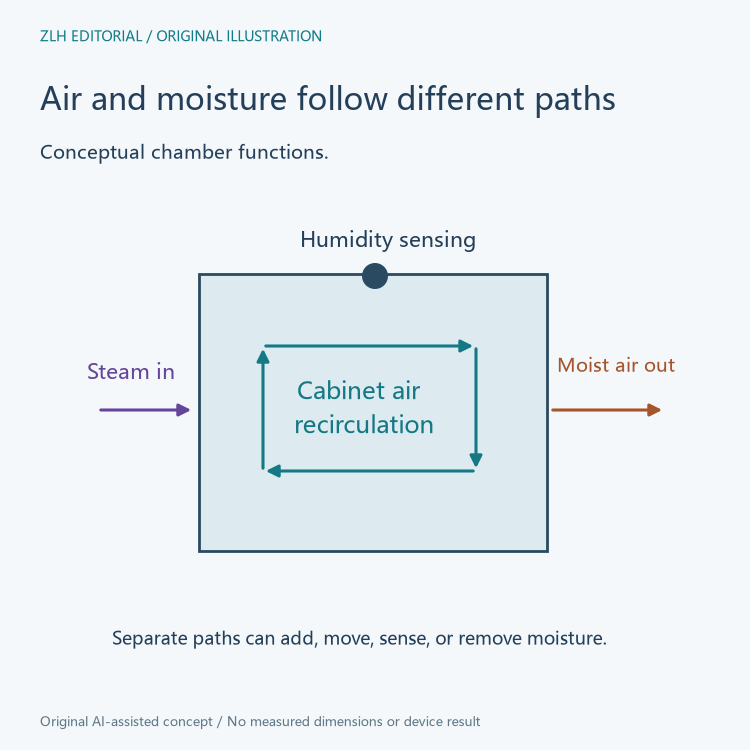
A drawing can use separate symbols for these functions even if an actual appliance integrates several of them behind one panel. An arrow in a recirculation loop should return to the cabinet, while an exhaust arrow should cross its boundary. That distinction makes it clear why circulating the gas and reducing the cabinet moisture are different actions. A moisture measurement can inform the control system without being the physical source or removal path for water vapor.
Read the cabinet and surface together
An equipment note can identify the chamber's air path, its steam source, and the place where moisture is sensed or removed. It can then state whether a heat-transfer explanation concerns convection in the gas or condensation on a cooler surface. That separates the controllable atmosphere from the transfer taking place at a particular object in the cabinet.
Related material appears in the equipment technology archive and technical article directory.
Manufacturer references
See Rational's combi oven technology guide and the UNOX technical overview of humidity, steam and airflow.


