

Decanter Centrifuges: Bowl Rotation and Scroll Speed
2026-11-07
Decanter Centrifuges: Bowl Rotation and Scroll Speed
Decanter Centrifuges separate suspended solids from liquid inside a rapidly turning bowl. A scroll inside the bowl moves the deposited solids toward a separate outlet. The bowl's rotation and the scroll's motion relative to it explain different parts of the same process. Reading the two speeds alongside the outlet paths makes a decanter diagram easier to follow.
The feed enters a rotating separation region
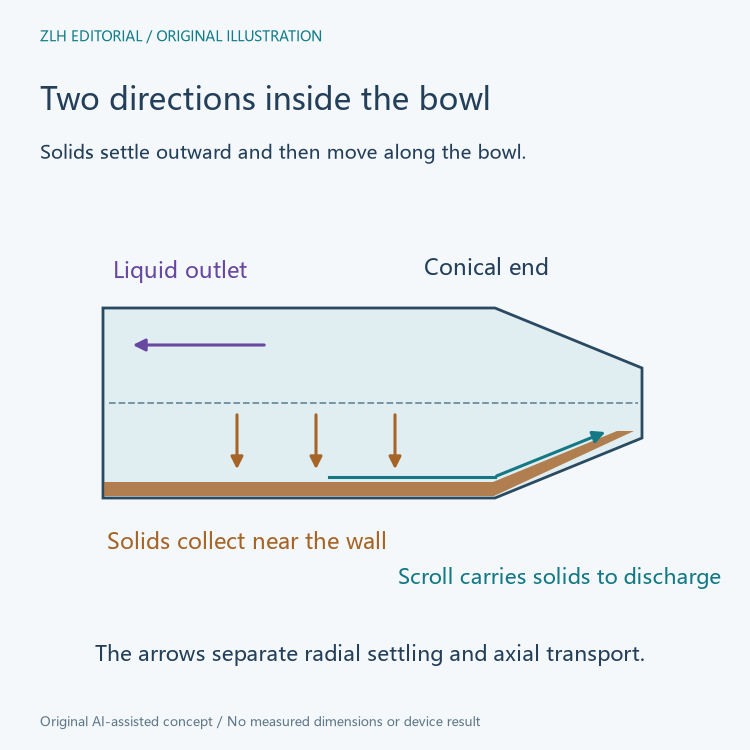
The Flottweg decanter functionality explanation describes a central feed pipe and distributor openings into the bowl. The incoming mixture is brought into rotation. For the type of suspension described, the solids are denser than the liquid. They move outward relative to the liquid and form a sediment layer against the inner bowl wall.
The sediment has a radial location in the rotating assembly. Moving outward toward the wall is distinct from traveling along the bowl to a discharge end. The former places the separated material where the scroll can act on it. A clear section drawing can therefore use one direction to show where the solid collects and another to show where it eventually leaves.
Relative rotation moves the solids along the bowl
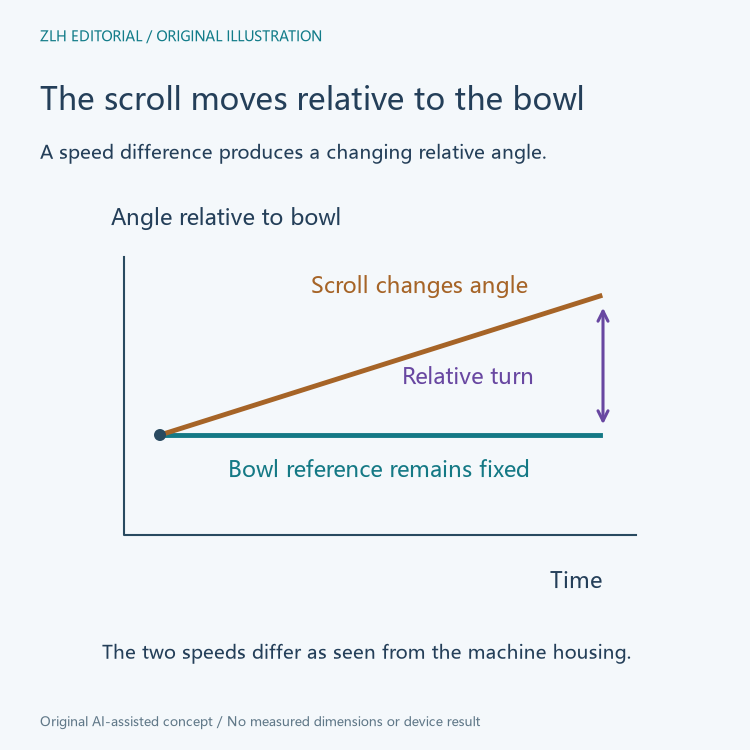
Flottweg describes the scroll as turning at a slightly different speed from the bowl. The helical flights consequently advance relative to the sediment layer at the wall. Their motion transports the separated material along the axis, toward the conically narrowing end. The scroll can rotate quickly with respect to the fixed machine housing while advancing slowly with respect to the bowl.
Imagine marking the two members and observing them for a short interval. If both turn the same amount in the same direction, the markers keep their initial spacing. The scroll has made no relative turn during that interval. If one member turns slightly farther, the spacing changes. The difference between their angular speeds describes that relative motion, while the bowl speed describes how fast the vessel itself is rotating.
The two outlets follow different paths
Flottweg's description takes the sediment toward the conical end. The scroll carries it out of the liquid region before the solids are discharged. The clarified liquid in the overflow arrangement goes toward the cylindrical end and exits over weir plates. The outlet locations separate the two phases after the rotating bowl has organized them.
The weir describes a liquid boundary. Its geometry affects the depth of the liquid layer, which the manufacturer calls the pond. Flottweg also describes a different discharge arrangement using an impeller or skimmer. A drawing can distinguish the weir version from a closed pressure discharge while keeping the sediment path clear. The word outlet alone leaves those details open.
Consider an inlet carrying liquid and small particles. Once the particles deposit near the wall, the pool and the solids can share the same turning space while moving toward different outlets. The equipment description can therefore identify where a sample was taken. A sample from the overflow represents a different stream from material leaving the cone.
Differential speed has a residence time role
The Flottweg differential speed reference relates the scroll's relative speed to the time solids spend inside the bowl. The geometry and relative motion together determine how the sediment advances. A change in that motion can alter solids residence and the time available for drainage before discharge.
The reference discusses adapting the difference as feed properties and load change. A statement about one machine therefore belongs with its feed and equipment context. The absolute bowl speed describes the rotating environment for separation, while the differential speed characterizes the scroll motion that removes the sediment. Quoting one figure leaves the other part of the mechanism unspecified.
The bowl geometry also matters. The cylindrical part provides the main separation length, while the cone gives the scroll a rising path out of the pool. Changing which part of the drawing is discussed changes which motion is relevant.
Keep the speeds and phase paths in the same record
An equipment summary can name the mixture being processed, the position where solids collect, the cone and solids discharge, and the method used to remove clarified liquid. It can then record whether each speed refers to the bowl, the scroll, or the difference between them. The same rotational units can appear in all three entries even though they describe different relationships.
For example, a schematic note can state that settling occurs near the bowl wall and that the scroll conveys the sediment along the axis. A separate line can describe the clarified liquid passing over a weir. This makes a comparison of drawings possible without inferring a measured separation result from their geometry. Related descriptions appear in the food equipment technology collection and the technical article directory.


