

Food Handling Vacuum Notes: Free Flow and Working Vacuum
2026-11-06
Food Handling Vacuum Notes: Free Flow and Working Vacuum
Vacuum Notes for a food-handling robot often place a suction-rate value beside a vacuum-level value. Those quantities describe different aspects of the system. A generator's maximum volume flow is not a second way of stating its working pressure, and neither number alone explains the behavior of a gripper on a package. Schmalz's technical references make the distinction useful when comparing the information supplied for an automated food-packaging cell.
A maximum suction rate has a free-flow reference
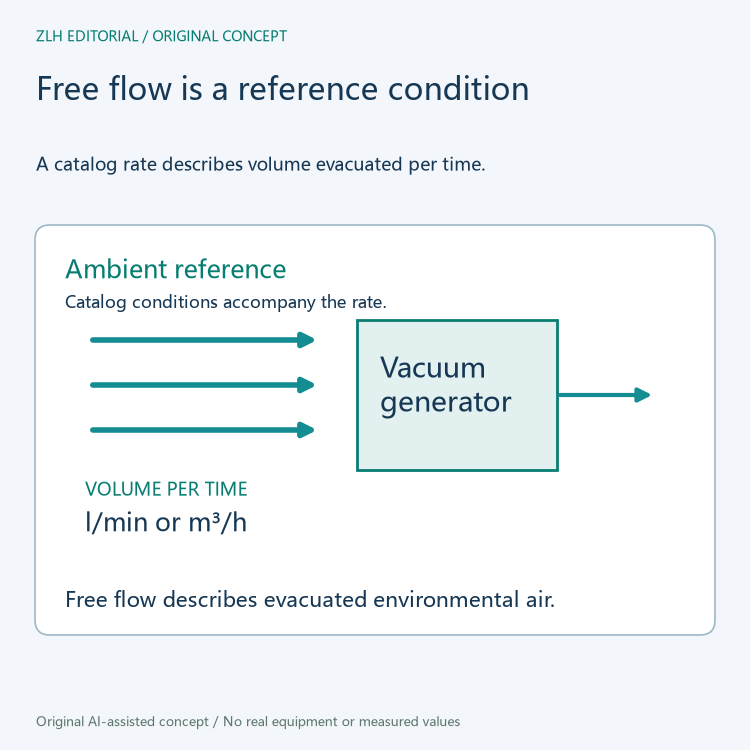
The official Vacuum Generators explanation defines nominal suction rate in litres per minute or cubic metres per hour. It associates the values with ambient pressure of 1,013 millibars and an ambient temperature of 20 degrees Celsius. Its maximum suction rate describes air evacuated from the environment under free-flow conditions.
That reference tells a catalogue reader what the rate represents. It does not describe a measurement taken while a particular package seals against a suction element. A food-line specification should retain the stated reference conditions alongside the rate, rather than relabel it as the flow achieved throughout every part of the handling cycle.
Volume per time and pressure also need distinct headings. A larger rate number does not directly specify a deeper vacuum. In a comparison table, keeping the original quantity and unit prevents a generator's airflow capacity from being mistaken for its pressure condition or for the mass of a package it can handle.
Generation method is another part of the specification
The same reference separates pneumatic generation from electrical generation. Its pneumatic group includes ejectors and vacuum units combining an ejector with monitoring and control. Its electrical group includes pumps and blowers. These categories describe how vacuum is generated, rather than the material composition of the suction element touching a package.
This matters when a food-robot offer says only that a vacuum gripper is included. The system account needs to identify the generator as well as the gripping component. An integrated unit and a separately supplied generator can have different documentation boundaries even when the summary uses the same word vacuum. The offered equipment list should say which components and functions are actually included.
Pressure and evacuation demand belong together
Schmalz's official Energy Required for Vacuum Generation explanation says energy demand rises disproportionately as a deeper vacuum is attained. It treats airtight and porous surfaces differently and discusses suction rate and suction area in the porous-material context. This is a relationship among pressure, flow demand and surface conditions, rather than a single larger-is-better scale.
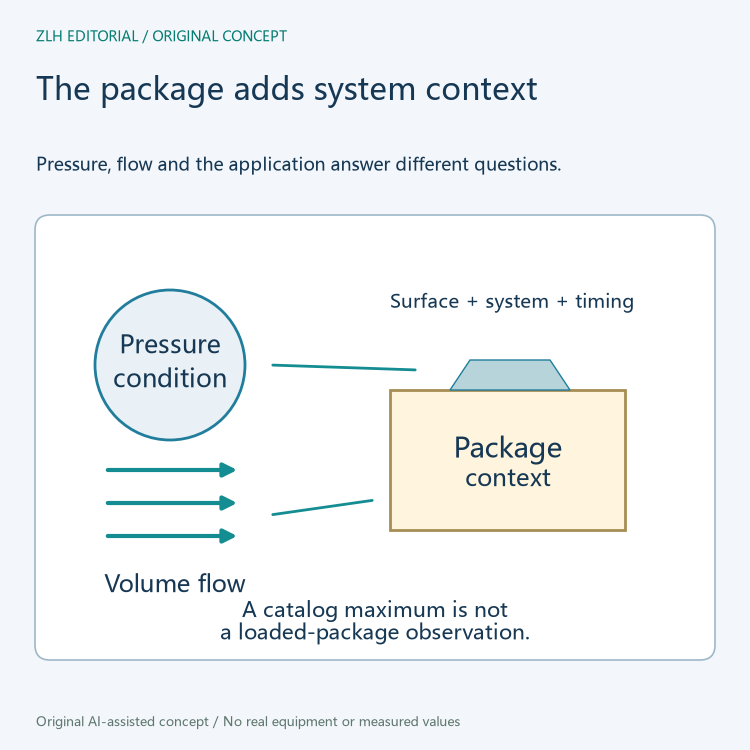
For a packaged-food application, the technical question is which package surface the account describes. A smooth reference sheet and an actual package can present different sealing conditions. A specification should identify that surface context before a catalogue rate is used to explain the application. This article gives no vacuum setting or handling-load calculation.
Cycle-time claims require more than a rate label
The official Selection Aid for Vacuum Generators lists the volume to be evacuated, the generator's evacuation capacity and valve switching times among the influences on cycle time. It also asks whether the workpiece is airtight or porous. A maximum free-flow entry cannot replace those system relationships.
A cell description may therefore name both a generator and a desired cycle without explaining how they are connected. The useful follow-up is to request the evacuation-volume and system account behind that timing statement. It is possible to understand what the catalogue quantity means while leaving the particular cycle-time claim unresolved. No timing trial is reported here.
Keep drive, location and package contact as separate facts
The selection aid distinguishes electric and pneumatic drives and includes generator location because it affects size, weight and additional functions. A robot-mounted component and a remote component should keep their actual identities in the equipment description. A generic gripper photograph does not establish the location of every generator, valve or monitoring element.
Package contact is a separate documentation subject. The generator explanation does not identify the material of a supplied contact surface or establish its suitability for direct food contact. In an equipment appendix, record which item the vacuum specification describes and keep any material declaration attached to its own component. This avoids giving an entire assembly a property documented only for another part.
Build an interpretable comparison for the food-line reader
A clear comparison separates generator type, nominal free-flow rate and reference conditions, working-vacuum context, package surface, evacuated volume and the source of any cycle claim. These fields describe a system more clearly than one combined suction-performance column. If two offers quote different objects or conditions, expose that difference before ranking their numbers.
The three current technical pages were read on November 6, 2026. The original diagrams explain airflow and application context without measured curves or an operating sequence. Related material appears in the food robot equipment category and technical reference category. Vacuum Notes become useful when free-flow capacity and working conditions remain connected but separately named.


